Grey seals and harbour seals, without the guesswork.
Britain’s two breeding seals: how to tell them apart, when the pups arrive, what the counts say, and how to watch them without getting in the way. Every fact traced to a source and dated where it can change, plus games, printables and Useless on shore leave.
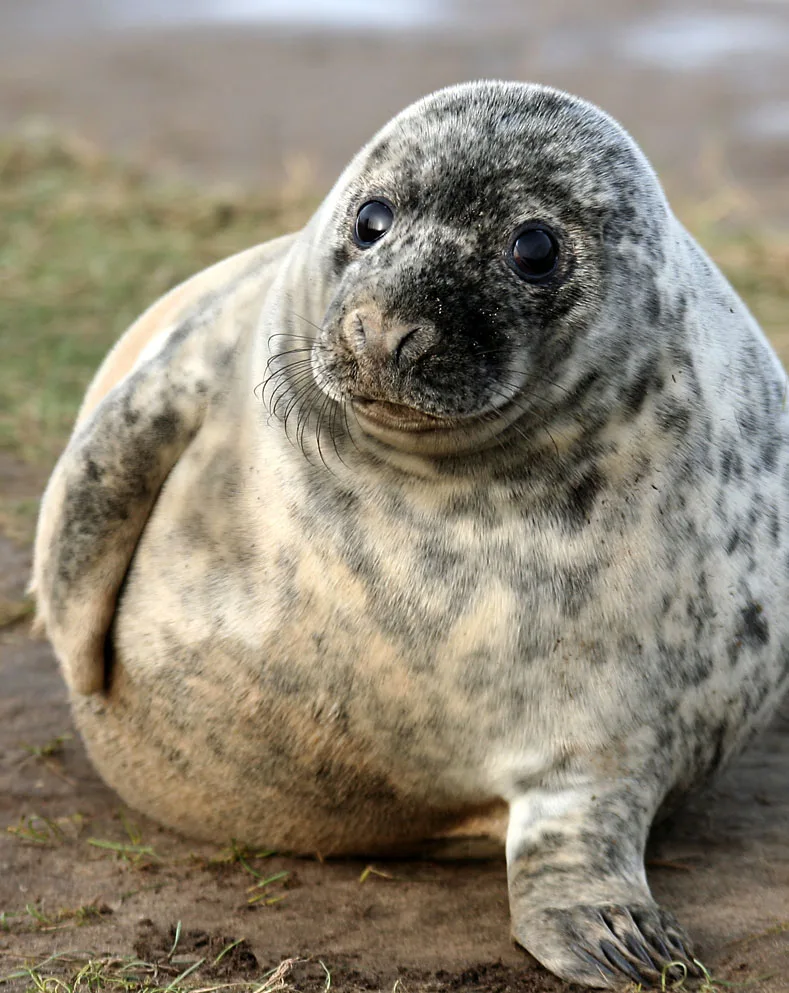
The short version
Two seal species live and breed around the UK all year: the grey seal and the harbour seal (also called the common seal). Natural History Museum: Seals in the UK Both belong to the family Phocidae — the true, or earless, seals. Natural History Museum: Seals in the UK
The grey seal is Britain’s largest resident seal. Adults can grow to more than 2.5 metres long and weigh up to about 300 kg. Natural History Museum: Seals in the UK Harbour seals are smaller: roughly up to about two metres long and around 70–150 kg. Natural History Museum: Seals in the UK
Harbour seals are also called common seals, but in the UK they are the less common of the two species. Natural History Museum: Seals in the UK Britain’s shores hold a large share of Europe’s grey seals: the Natural History Museum puts the UK population at about 120,000, roughly 40% of the world total and about 95% of the European population. Natural History Museum: Seals in the UK
Grey seals are doing relatively well in UK waters; harbour seals are not, in many places. See threats & the numbers.
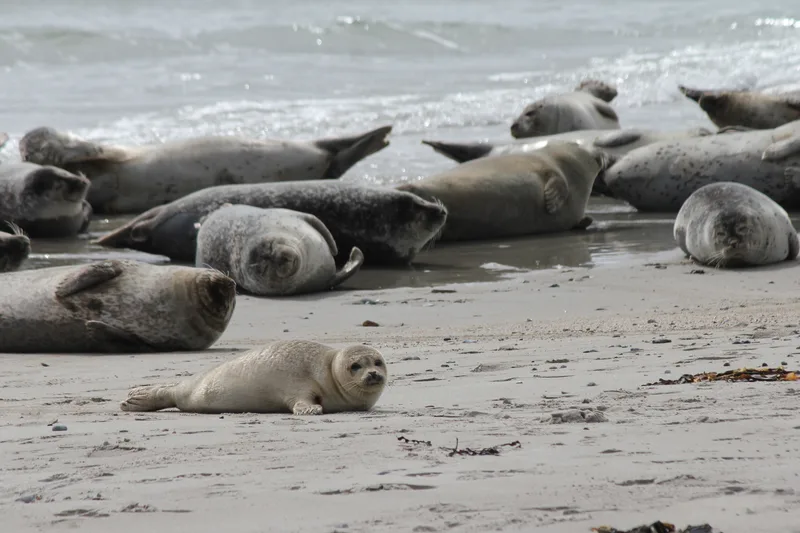
- The Mammal Society notes harbour seals diving for up to about 10 minutes and reaching depths of at least 50 metres on feeding trips. Mammal Society: Harbour seal
- MarLIN records harbour seals diving to 450 m and staying submerged for up to 30 minutes. MarLIN: Common or harbour seal
One source gives a typical feeding depth; another gives a maximum recorded depth. Both can be true. Every disagreement we found →
Start somewhere
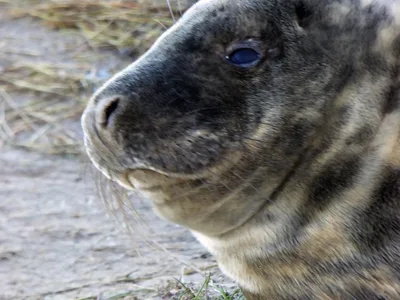
 Tell them apartRoman nose vs dog face, parallel nostrils vs a V, white pups vs swimmers.
 Bodies & divingBlubber, whiskers, dive times and how deep the sources say they go.
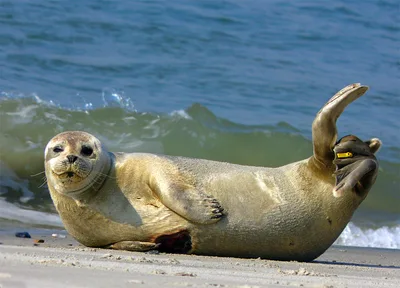 The two speciesGrey seal and harbour seal, with IUCN categories dated to the day we checked.
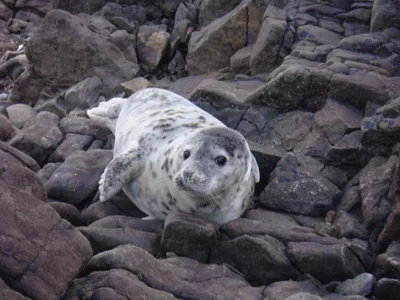 Pups & seasonsAutumn grey pups, summer harbour pups, milk and when to leave them alone.
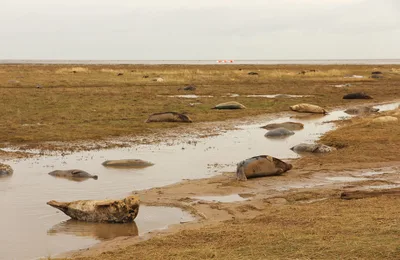
Where & whenHaul-outs, moult months and the coasts that matter.
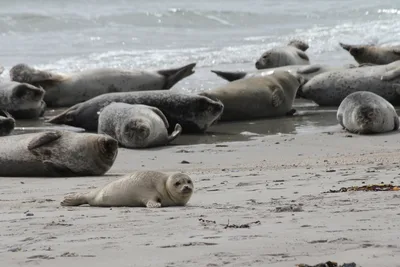 Threats & countsSCOS numbers, Marine Strategy status and why local declines matter.
Tile photos are credited on their pages and on the credits page.
Things to do while the kettle boils
A white coat on the sand
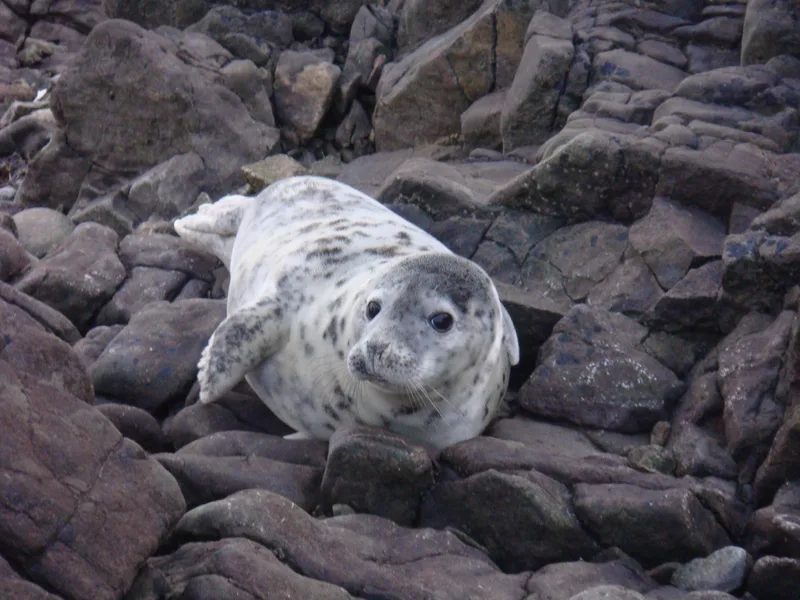
Grey seal pups are born with fluffy white coats and stay ashore for about two to three weeks before entering the water. Natural History Museum: Seals in the UK By about a month old it is normal for a grey seal pup to be left alone on the beach while the mother feeds at sea — it is not usually abandoned. Natural History Museum: Seals in the UK
And a pup that can swim at once
Harbour seal pups are born ready to swim and can enter the water within a few hours of birth. Natural History Museum: Seals in the UK Compare both on life cycle.
Enjoying the seals? Help keep the lights on.
This site is hand-built, fact-checked and free to read. If a fact, a game or one of Useless’s notes made you smile, a little support keeps it going and helps the network grow.
Seal printables
Fact-checked PDFs in A4 and US Letter.

UK Seals Spotter & ID Cards
Double-sided cards for grey and harbour seals, pups and lookalikes, a haul-out checklist and a Who am I? game — with every fact sourced

Seal Life Cycle & Anatomy Pack
Label the seal, compare grey and harbour pups, a year-in-the-life calendar, diving maths and answer keys for ages 7 to 11

Seal Activity & Colouring Pack
Colouring scenes, maze, word search, spot the difference and design-a-seal pages for ages 4 to 9

Seal Facts Poster Set
Six fact-checked posters: meet the UK seals, tell them apart, pups, diving, conservation and watching code

Seal Coast Watching Journal
When and where to look, a watching code, haul-out logs, sketch pages and a season review for families

Seal Quiz & Word Puzzles Pack
Crossword, code breaker, true or false, number match and a quiz on UK seals, with answer keys
 Best value
The Complete Seal Printables Bundle
All six packs plus a guide, A4 and US Letter, in one download.