Pups, milk and seasons
Grey seals and harbour seals raise pups in different seasons and in different ways.
Grey seal autumn
Grey seals around the UK mostly pup between September and December (timing varies by coast: earlier in the west, later in the east). Natural History Museum: Seals in the UK Grey seal pups are born with fluffy white coats and stay ashore for about two to three weeks before entering the water. Natural History Museum: Seals in the UK
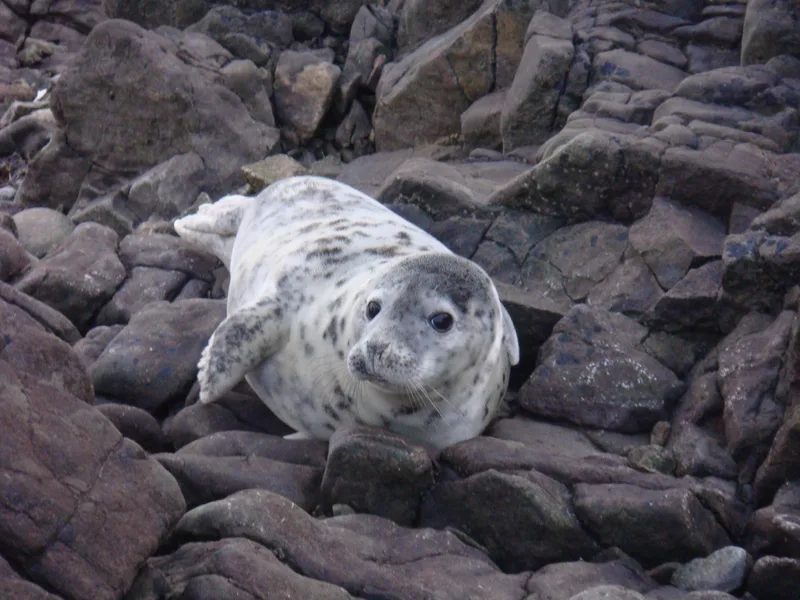
By about a month old it is normal for a grey seal pup to be left alone on the beach while the mother feeds at sea — it is not usually abandoned. Natural History Museum: Seals in the UK Seal pups drink rich milk — about 2.5 litres a day — and put on insulating blubber quickly. Natural History Museum: Seals in the UK
Grey seal females can live up to about 30 years; males seldom survive beyond about 25. Mammal Society: Grey seal
Harbour seal summer
Harbour seals usually pup in June and July. Natural History Museum: Seals in the UK Harbour seal pups are born ready to swim and can enter the water within a few hours of birth. Natural History Museum: Seals in the UK
Harbour seal mothers suckle for about three to four weeks; pups roughly double their birth weight in that time. Mammal Society: Harbour seal Harbour seal females can reach about 30 years; males are unlikely to live beyond about 20. Mammal Society: Harbour seal
- The European IUCN assessment for the harbour seal (Phoca vitulina) is Least Concern, though some local populations are of concern. IUCN Red List: Harbour seal European assessment · checked 5 Nov 2026
- NAMMCO notes the harbour seal as Least Concern on the global IUCN Red List, with a very large worldwide population, while stressing that local stocks can be stable, increasing or declining. NAMMCO: Harbour seal · checked 5 Nov 2026
- SCOS reports that harbour seal numbers are declining and/or depleted in most UK Seal Monitoring Units with notable numbers. SCOS scientific advice on UK seal populations (2025 report) · checked 5 Nov 2026
Least Concern worldwide or in Europe can still mean serious local declines — as in much of the UK. Every disagreement we found →
A lone seal pup on a beach is often waiting for its mother. Keep your distance, keep dogs away, and call a local rescue if the pup looks injured or is in clear danger — do not put it back in the sea yourself. Natural History Museum: Seals in the UK This site is not a rescue service. Contact a local marine mammal rescue or your local wildlife trust / SSPCA / BDMLR.
Next: where & when →